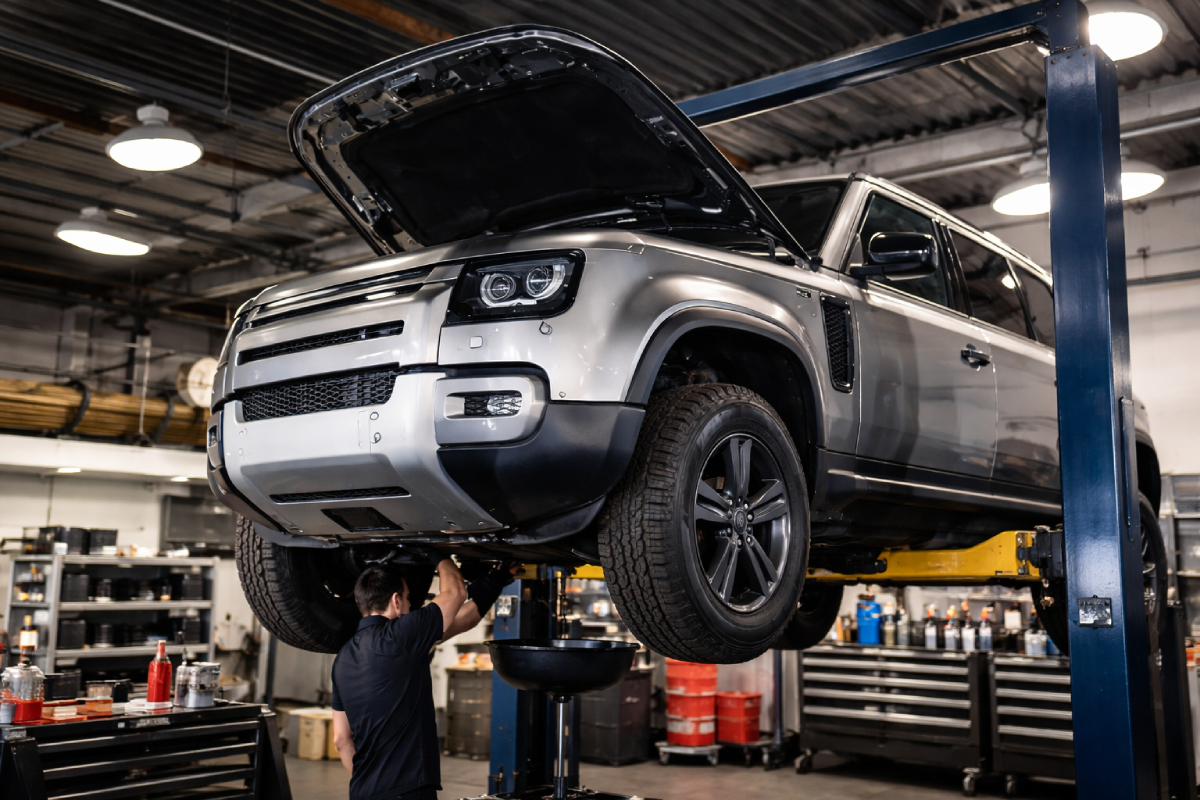


Few things cause more driver anxiety than seeing the check engine light illuminate on your dashboard. Whether you drive a Range Rover Sport, Discovery, Defender, or Range Rover Velar, that amber or flashing light is your vehicle’s way of telling you something isn’t quite right.
At JC’s British & 4×4, your independent Land Rover specialists in Englewood and Sheridan, CO, we’ve helped countless Denver-area drivers diagnose and fix check-engine-light issues. Understanding what that warning means — and how to respond — can save you money, prevent breakdowns, and extend the life of your vehicle.
What Your Land Rover’s Check Engine Light Really Means
Every modern Land Rover and Range Rover is equipped with an advanced onboard computer system known as OBD-II (On-Board Diagnostics). This system constantly monitors sensors throughout your engine, exhaust, and emissions systems.
When the system detects an abnormal reading — such as too much oxygen in the exhaust, low fuel pressure, or a misfire — it logs a Land Rover OBD-II code and activates the check engine light.
Steady vs. Flashing: Understanding the Severity
- Steady amber light → A minor issue has been detected. The vehicle is usually safe to drive, but it should be inspected soon.
- Flashing or blinking light → A serious fault (often a misfire or emissions issue) that can damage your catalytic converter or engine. Stop driving if possible and have it checked immediately.
Ignoring the light can cause small problems to escalate — E.g., turning a $200 sensor replacement into a $3,000 catalytic converter repair.
8 Common Land Rover Check Engine Light Warnings
Here are the most common reasons your Land Rover or Range Rover might trigger a check engine light, based on our diagnostics at JC’s British & 4×4.
1. Loose or Damaged Fuel Cap Warning
Believe it or not, a loose or cracked fuel cap is one of the most common (and easily fixed) triggers of the Land Rover check engine light.
When your cap doesn’t seal properly, fuel vapors escape from the tank, causing the OBD-II system to detect an EVAP leak.
Symptoms:
- Check engine light on shortly after refueling
- Noticeable fuel smell near the filler neck
2. Oxygen (O₂) Sensor Malfunction Warning
The oxygen sensor measures how much unburned fuel is in your exhaust gases and helps the engine adjust its air-to-fuel ratio.
Faulty O₂ sensors are a leading cause of Range Rover check engine light warnings, particularly in models like the Land Rover Discovery II (’99-04).
Symptoms:
- Decreased fuel economy
- Rough idle or hesitation
- CEL accompanied by codes like P0130 or P0150
Why it matters: A bad sensor can cause poor performance and higher emissions, and if ignored, it can damage your catalytic converter.
3. Mass Air Flow (MAF) Sensor Warning
Your MAF sensor measures how much air enters the engine so the ECU can deliver the correct amount of fuel.
When it becomes dirty or fails, a Land Rover diagnostic may reveal codes like P0101 or P0102.
Symptoms:
- Hard starting
- Hesitation or rough acceleration
- Stalling shortly after starting
At JC’s British & 4×4, we often replace MAF sensors on Land Rover models to restore smooth engine performance.
4. Engine Misfire or Ignition Coil Warning
A flashing check engine light indicates a misfire — when fuel in one or more cylinders fails to ignite properly.
Common causes include worn spark plugs, failing ignition coils, or faulty fuel injectors.
Symptoms:
- Noticeable shaking or rough running
- Loss of power, especially under load
- Check engine light flashing during acceleration
Why it’s serious: Unburned fuel can overheat and damage the catalytic converter. If your check engine light is flashing, stop driving and call a Land Rover mechanic immediately.
5. Catalytic Converter Efficiency Warning
Your catalytic converter reduces harmful emissions by converting exhaust gases like carbon monoxide into less toxic compounds.
When the converter fails — or when upstream sensors send bad data — you may see codes like P0420 or P0430 (“Catalyst System Efficiency Below Threshold”).
Symptoms:
- Decreased engine performance
- Rattling noise from under the vehicle
- Sulfur or “rotten egg” smell
Replacement can be costly, but catching upstream issues (like O₂ or MAF sensor faults) early can save you from premature converter failure.
6. EVAP System Leak or Emissions Control Fault
The Evaporative Emission Control (EVAP) system prevents fuel vapors from escaping into the atmosphere.
Leaks or sensor faults in this system are a common cause in some Land Rover models warning light meanings related to emissions.
Symptoms:
- CEL on, with no noticeable performance issues
- Codes like P0455 (large leak) or P0456 (small leak)
Common culprits:
- Cracked EVAP hoses
- Faulty purge valve or vent solenoid
- Damaged charcoal canister
7. Battery Voltage or Charging System Warning
Low battery voltage can trigger false sensor readings that set off the check engine light.
In Land Rovers equipped with advanced electronics — especially Range Rover Sport and Discovery 5 — a weak battery can cause multiple warning lights and even limp-mode activation.
Symptoms:
- CEL combined with other warning icons
- Slow cranking or electrical glitches
- Codes such as P0562 (System Voltage Low)
Always have the battery and alternator tested before assuming deeper issues. A Land Rover service center like JC’s British & 4×4 can verify charging voltage and load-test your system properly.
8. Intake or Vacuum Leak Warning
A vacuum or intake leak lets unmetered air enter the engine, upsetting the precise fuel-air mixture your ECU expects.
This can cause lean running conditions, misfires, and an illuminated check engine light.
Symptoms:
- Rough idle or surging RPMs
- Hissing sound under the hood
- Codes like P0171 or P0174 (system too lean)
Common sources: Cracked intake hoses, worn gaskets, or loose clamps. These are particularly common on higher-mileage LR4s and Range Rover Sports.
What to Do When the Check Engine Light Comes On
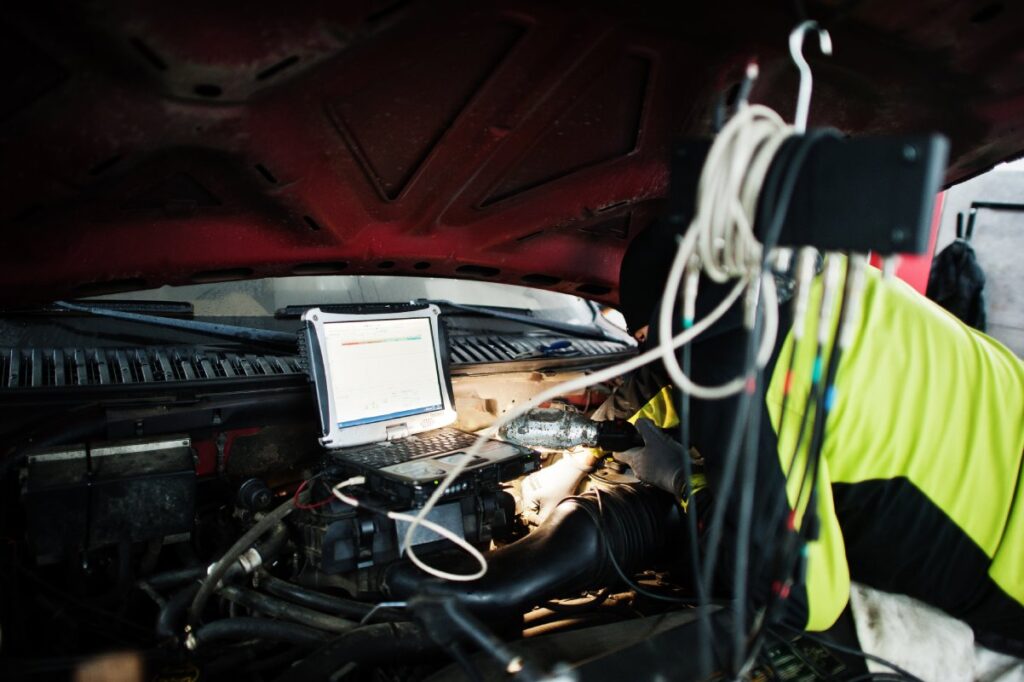
A check engine light diagnosis doesn’t always mean bad news. Many Land Rover owners can perform quick checks before visiting a specialist.
Quick Checks You Can Do at Home
- Check the gas cap: Tighten it until it clicks three times.
- Inspect for obvious issues: Loose hoses, low fluids, or visible damage.
- Observe your Land Rover’s behavior: Note changes in power, idle, or fuel economy.
- Avoid clearing the code yourself: Using a cheap scanner may erase valuable data that helps a professional diagnose the real cause.
If the light remains on after a few trips, it’s time to visit your Land Rover mechanic for a proper scan.
When It’s Safe to Drive and When to Stop Immediately
- Safe to drive: The light is steady, and your vehicle runs normally. Schedule an inspection soon.
- Stop immediately: The light is flashing, or you notice performance issues, smoke, or strong odors. Continuing to drive could cause expensive damage.
Denver drivers often experience issues related to altitude and temperature changes, which can worsen lean conditions and misfires. When in doubt, have your Land Rover diagnostic service performed right away.
Why a Professional Land Rover Diagnostic Is Worth It
Modern Land Rovers and Range Rovers use brand-specific codes that generic scanners often misread.
At JC’s British & 4×4, we use factory-grade diagnostic tools capable of reading Land Rover OBD-II codes precisely, identifying not only what system is affected but also which component is malfunctioning. For older models, we’ve got you covered too—pre-OBDII (pre-’96) diagnostics are non-standardized, and we have the specialized scan tools needed for early Rovers as well.
Our diagnostic service includes:
- Reading and interpreting stored and pending fault codes
- Live data analysis from all major sensors
- Electrical testing for ignition and emissions systems
- Recommendations for immediate and preventative repairs
Whether it’s a Range Rover Velar showing an intermittent MAF sensor fault or a Discovery 5 with a persistent EVAP leak, our technicians provide accurate solutions — not guesswork.
Preventing Future Check Engine Light Warnings
Prevention is always cheaper than repair. Here are some maintenance habits we recommend to Land Rover owners across Denver and the Front Range.
- Follow your recommended service schedule: Replace spark plugs, filters, and fluids at the recommended intervals or when needed.
- Use quality fuel and OEM parts: Avoid low-grade gas or aftermarket sensors that may cause inaccurate readings.
- Inspect vacuum and intake hoses during every service: Rubber components harden and crack over time.
- Keep your battery healthy: Denver winters are hard on batteries — have them tested annually.
- Get seasonal inspections: Altitude and temperature swings can trigger false readings; our Land Rover service center offers seasonal checkups.
By staying ahead of maintenance, you reduce the chances of unexpected check engine light warnings.
Why Choose JC’s British & 4×4
As an independent Land Rover specialist located in Englewood and Sheridan, CO, JC’s British & 4×4 proudly serves Denver and the surrounding areas.
We specialize exclusively in JLR vehicles (Land Rover and Jaguar) — including Defender, Discovery, Range Rover Sport, Velar, Evoque, and more.
Our team of certified technicians provides:
- Expert Land Rover diagnostic services
- Complete repair and maintenance solutions
- Accessory installation and off-road outfitting
- Honest communication and personalized service
When your check engine light appears, we combine technical expertise with the passion of lifelong Land Rover enthusiasts.
Conclusion: Don’t Ignore That Land Rover Check Engine Light
Your Land Rover or Range Rover is engineered to perform at its best — on-road or off-road. The check engine light isn’t a reason to panic, but it is a reason to act.
By understanding what the warning means and partnering with trusted professionals like JC’s British & 4×4, you protect your investment and ensure your Land Rover stays reliable for every Colorado adventure.
Schedule Your Land Rover Diagnostic Service Today
If your check engine light is on, visit JC’s British & 4×4 in Englewood or Sheridan, CO, call at 720-740-5318, or reach our Facebook page to schedule a Land Rover diagnostic service.
We proudly serve Denver, Littleton, Highlands Ranch, and the entire Front Range — helping Land Rover owners drive confidently, knowing their vehicle is in expert hands.JC’s British & 4×4 — Denver’s Independent Land Rover Specialists.
Frequently Asked Questions
What does the check engine light mean on a Land Rover?
The check engine light alerts you to a problem with your Land Rover’s engine, emissions, or sensors. It’s triggered by your vehicle’s OBD-II system detecting abnormal readings.
Can I drive my Land Rover with the check engine light on?
If the light is steady and the vehicle runs fine, short-term driving is usually safe. If the light flashes or there are noticeable performance issues, stop driving immediately.
What are the most common reasons a Land Rover check engine light turns on?
Common causes include a loose gas cap, oxygen sensor failure, ignition coil problems, catalytic converter issues, or an EVAP system leak.
How do I reset the check engine light on my Range Rover?
You shouldn’t reset the light without diagnosing the issue first. Visit a Land Rover specialist like JC’s British & 4×4 for a professional scan and repair to prevent damage.
Do older (pre-1996) Land Rovers use the same diagnostics as modern models?
No, pre-OBDII Land Rovers use non-standardized diagnostics. JC’s British & 4×4 has the specialized tools to diagnose both modern and early Rover models.
Why should I choose JC’s British & 4×4 for Land Rover diagnostics?
JC’s British & 4×4 uses factory-grade diagnostic tools, offers expert Land Rover–specific repairs, and serves Denver, Englewood, Sheridan, and the surrounding areas.